Disclosure: The links provided in this evaluation represent intentional affiliate partnerships. We earn a commission when you register, sign up, or apply through these links at absolutely no additional cost to you. All product recommendations are made objectively based on public user track records.
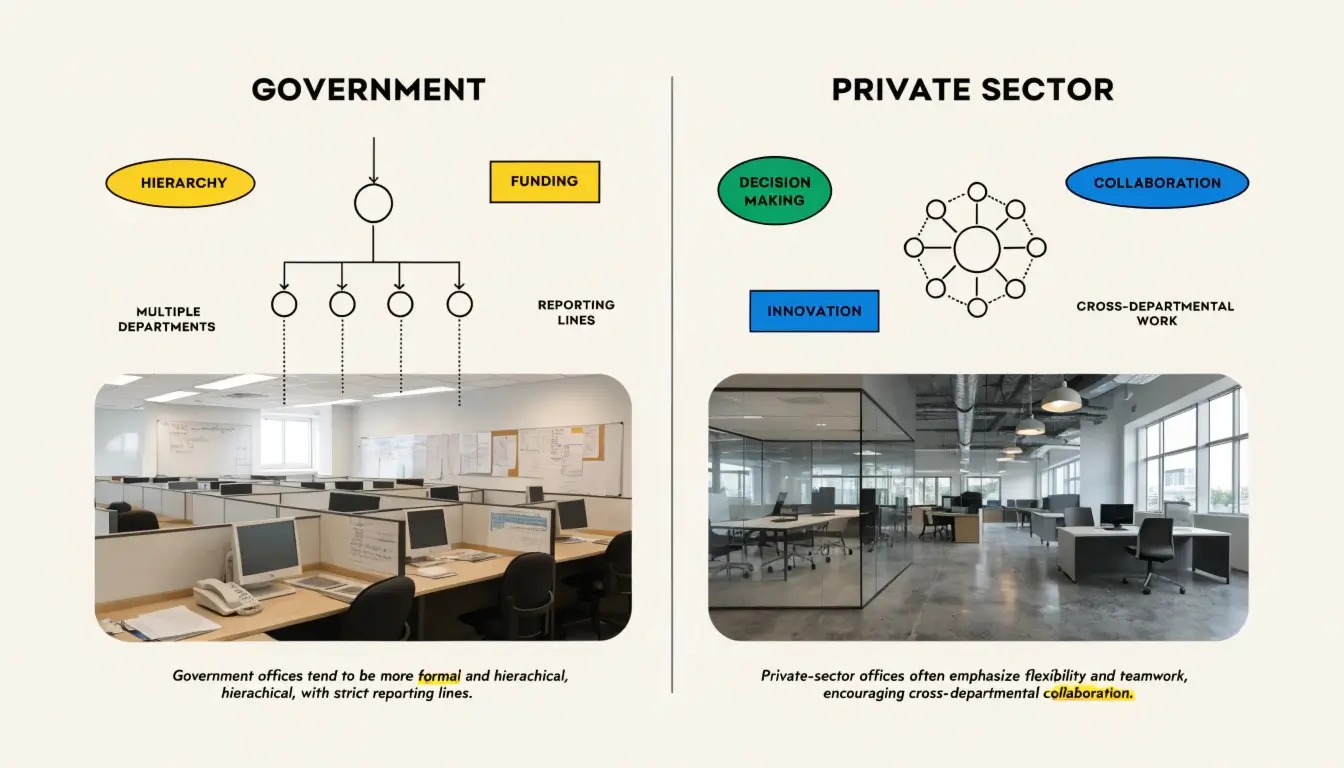
When navigating the modern employment landscape, analyzing government jobs vs private jobs represents one of the most critical financial and lifestyle decisions a professional can make. Economic shifts, corporate restructurings, and evolving pension systems across various industries have caused millions of job seekers to reassess their professional trajectory. Ultimately, understanding how to navigate government jobs vs private jobs allows candidates to align their natural work styles with secure, long-term wealth building.
The fundamental difference between government jobs vs private jobs centers on the trade-off of risk versus compensation upside. Public service offers unmatched stability, guaranteed retirement pensions, and consistent work-life balance, while corporate roles provide faster career mobility, higher raw earning caps, and performance bonuses. Choosing between government jobs vs private jobs ultimately depends on your individual risk tolerance and long-term financial goals.
⚠️ Table of Contents
Quick Picks Snapshot (Updated 2026)
- Best Overall: Public sector positions for long-term pension planning and career peace of mind.
- Lowest Cost / Top efficiency: Corporate career paths utilizing digital credentials for rapid career scaling.
- Best for beginners: Structured local civil service tracks that provide extensive on-the-job vocational training.
- Data Disclosure Notice: Material limits, credentials, pricing, and operating fees are based on publicly available directories and documentation files as of 2026. Note that navigating the decision-making framework for government jobs vs private jobs depends heavily on local municipal regulations.
Side-by-Side Comparison Matrix
To grasp the microeconomic differences between these career tracks, candidates must analyze how structural systems differ. Below, we compare the core attributes of both professional landscapes to clarify how daily operations vary.
| Core Metric | Public Sector Option | Private Sector Option | Operational Context |
|---|---|---|---|
| Job Security | Highly secure; protected by civil service boards and collective bargaining agreements. | At-will basis; vulnerable to market fluctuations and administrative reorganizations. | Evaluating job security government vs private sector highlights the stability of public contracts. |
| Earning Velocity | Strictly graded step systems; cost-of-living adjustments tied to municipal budgets. | Highly flexible; market-based adjustments with discretionary performance bonuses. | Analyzing government jobs salary vs private salary reveals much higher early cash upside in corporate roles. |
| Retirement Architecture | Guaranteed defined-benefit pensions backed by federal or state contributions. | Defined-contribution 401(k) plans requiring active personal investment strategies. | Reviewing government jobs benefits vs private jobs reveals unmatched pension depth in public roles. |
| Hiring Timelines | Extended screening windows; rigorous background checks and background exams. | Agile cycles; immediate start options following direct team evaluations. | Understanding government jobs vs private jobs timeline speeds helps freshers navigate early career steps. |

How to Choose Between Government Jobs and Private Jobs
To begin, analyzing the differences between government jobs vs private jobs requires an honest assessment of your personal career goals. Candidates looking for stable hours and a predictable trajectory will find public service appealing, whereas competitive individuals usually prefer private markets. When discussing whether a government job or private job which is better, the answer depends heavily on your professional experience and risk tolerance. Evaluating government jobs vs private jobs through the lens of entry requirements can help freshers make an informed career pivot early.
Additionally, educational credentials play a major role in how you approach government jobs vs private jobs. Government agencies require strict qualification verification, while tech startups or local private businesses often skip formal degree requirements. Consequently, understanding the barrier to entry of government jobs vs private jobs helps you plan your certifications and training programs accordingly.
Equally important is looking at geographically targeted hiring trends. Job seekers can utilize high-performing optimization tools to locate hot regions where both sectors are hiring aggressively. Balancing these criteria ensures you build an actionable application pipeline.
Detailed Career & Option Reviews
In this section, we analyze individual career categories to see how government jobs vs private jobs operate in practice.
Administrative Services: Public Administration vs. Corporate Support
When exploring administrative functions, comparing government jobs vs private jobs reveals distinct work paces. Public sector clerks operate within rigid departmental workflows, relying on clear procedural guides. Conversely, corporate administrative assistants must wear multiple hats, handling modern CRM scheduling and client coordination with rapid response expectations.
For freshers, entering government jobs vs private jobs presents different developmental speeds. A Premium Resume Optimizer is highly beneficial here to ensure your application highlights administrative accuracy or commercial adaptability. Private roles will often reward fast learning curves with prompt promotions, while municipal roles require serving set time periods before advancing.
Ultimately, the choice of administrative work within government jobs vs private jobs boils down to whether you prefer predictable routines or dynamic corporate workloads. Private offices offer high-tech tools and hybrid flexibility, whereas public services secure unmatched, lifetime pension allocations.
Information Technology: Civil Service Tech vs. Startup Development
The technology sector highlights a massive divergence in the debate of government jobs vs private jobs. Software developers in government roles typically maintain legacy mainframes or focus on large-scale public portals. These roles have lower daily pressure, and engineers enjoy strict 40-hour work weeks without the threat of sudden commercial down-sizing.
Conversely, public sector tech teams prioritize security over modern tech stack experimentation. Applying to tech roles within government jobs vs private jobs requires distinct preparations. Candidates seeking the private sector should leverage modern bootcamps, while public sector applicants must prepare for systematic competency examinations using structured prep materials like a Civil Service Exam Masterclass.
Those seeking technical paths should analyze government jobs vs private jobs in terms of portfolio building versus long-term pension benefits. High-growth private enterprises provide equity and stock options, while public positions protect your employment during severe economic contractions.

Engineering & Infrastructure: Municipal Utilities vs. Commercial Contractors
Civil and mechanical engineers regularly evaluate government jobs vs private jobs based on project scope. Municipal engineers oversee water facilities, highway safety, and regional urban planning. This structural focus ensures public engineers work closely with local environmental standards and community stakeholders.
However, municipal engineering teams offer unparalleled project longevity. This comparison between government jobs vs private jobs shows that public engineers enjoy superior work-life balance. Meanwhile, private contractors face demanding client delivery deadlines and irregular, project-dependent schedules.
For career longevity, evaluating government jobs vs private jobs in engineering helps clarify your preferred regulatory environment. If stability and steady regional impact are your priorities, public service municipal roles offer a rewarding path.
Healthcare & Medicine: Public Health Agencies vs. Private Hospitals
Healthcare practitioners face unique choices when weighing government jobs vs private jobs. Working inside a county health department involves systemic wellness programs, low-income patient support, and structured public clinics. These roles focus heavily on community outreach rather than commercial administrative metrics.
In comparison, state clinics offer steady scheduling and union representation. Examining government jobs vs private jobs for nursing reveals a vast difference in burnout rates. Private hospitals, despite offering higher hourly pay rates, often report extreme stress and challenging patient-to-staff ratios.
Therefore, aligning your health career within government jobs vs private jobs determines your daily patient-to-staff ratios. Public roles provide a manageable pace, while private hospitals serve those looking to maximize immediate overtime earnings.
Financial Operations: Government Auditing vs. Corporate Finance
Accountants and financial analysts look at government jobs vs private jobs from a risk-management perspective. Public agency auditors verify that tax allocations and grant disbursements adhere strictly to statutory guidelines. This specialized expertise is highly valued by compliance institutions nationwide.
Comparing government jobs vs private jobs in finance reveals that corporate roles pay far higher performance bonuses. However, private finance is highly volatile, with earnings tied directly to quarterly company targets. Corporate financial analysts regularly report demanding schedules during peak earnings cycles.
To decide, weighing government jobs vs private jobs means choosing between immediate cash rewards or guaranteed retirement income. For many, the peace of mind of a government retirement plan outweighs the high-stress bonuses of corporate markets.
Skilled Trades: State Maintenance vs. Commercial Construction
For vocational professionals, evaluating government jobs vs private jobs focuses on daily working conditions. A comprehensive utility comparison roadmap serves as a great starting guide for individuals seeking hands-on vocational trades without formal collegiate pathways. Public maintenance roles provide consistent service yards and predictable regional territories.
State maintenance workers enjoy stable public equipment fleets. On the other hand, commercial construction teams offer higher overtime wages, making government jobs vs private jobs an important debate for tradespeople. Private crews must travel to remote job sites and navigate seasonal project pauses, whereas public trade roles offer continuous year-round paychecks.
Ultimately, entering skilled trades through government jobs vs private jobs dictates your long-term physical sustainability. The public option provides consistent, manageable labor schedules, protecting your health over a long career.
Civil Service Exam Masterclass
Unlock step-by-step prep tools and mock examinations designed to help you secure a top-tier civil service career.
Total Compensation Analysis (Visual Modeling)
Guaranteed Pension Yields vs. Corporate 401(k) Matching
To properly compare these options, we must look beyond base salaries. This calculation highlights the financial nuances of government jobs vs private jobs over a 30-year timeframe using standard federal formulas.
- Public Sector Pension Model: 30 Years Service × 1.1% Multiplier × $90,000 High-3 Salary Average = $29,700 annual lifetime annuity starting at retirement.
- Private Sector 401(k) Match Value: $90,000 Base × 4% Annual Employer Contribution Match over 30 Years (assumed 6% average market return) = $304,395 portfolio value at retirement.
Note: The corporate portfolio is subject to market corrections, while the public pension remains guaranteed for life and includes automatic cost-of-living increases.

Pros and Cons and Main Tradeoffs
Weighing the government jobs vs private jobs pros and cons is essential for anyone plotting a career shift in 2026. This section reviews the advantages and disadvantages of both sectors to help you make an objective, long-term decision.
First, evaluating government jobs advantages and disadvantages highlights the value of stability. The chief benefit of public employment is high job security, allowing workers to plan their lives without the threat of sudden corporate downsizings. However, the downside is slow wage progression, structured bureaucratic steps, and a hiring process that can take up to six months.
Similarly, reviewing private jobs advantages and disadvantages reveals the value of earning potential. The corporate sector rewards high performance with rapid promotions and bonuses, and offers modern, flexible workspaces. On the downside, corporate employees face higher pressure, less job security, and a retirement model that relies entirely on personal investments. Candidates looking for detailed industry pathways can reference our expert tool integration guide.
Common Pitfalls & Mistakes to Avoid
One major mistake beginners make is overlooking the total compensation package. Many job seekers focus only on base salary numbers, missing the massive financial value of public sector healthcare and guaranteed pensions. Additionally, public sector hiring systems require extremely detailed resumes; submitting a generic, one-page corporate resume often leads to automatic rejection by automated applicant tracking systems.
Another error is failing to prepare for civil service exams. Many candidates assume their college degrees are enough to bypass these tests, only to fail the technical screenings. Preparing with targeted study guides and practice exams is essential to landing a spot on eligible hiring lists.
📍 How to Seek and Secure This in Your Area
- Register with Official Portals: Create a profile on USAJOBS.gov or your local state government portal to receive automated alerts for public positions.
- Attend Specialized Job Fairs: Participate in local municipal career days, which offer direct recruitment paths and face-to-face networking with agency representatives.
- Update Your Resume Standards: Align your professional history with civil service requirements, ensuring you detail every qualification to match state standards.
- Leverage Regional Agencies: Partner with local county offices and public utility offices, which regularly hire skilled trades and administrative personnel directly.
⚠️ Operational Safety & Risk Warning:
Never pay fees to access public job boards or apply for federal positions. Official government recruitment sites are completely free to use. Always verify civil service job postings on official state or municipal domains ending in .gov to avoid phishing scams.
“Transitioning to a federal agency cut my daily stress in half. While I earned higher base pay in the corporate sector, the predictable 40-hour weeks and excellent family health benefits have been a major upgrade for my household.”
— r/FedEmployees Forum Community Insight / Anonymous Public Feedback Summary
Frequently Asked Questions
How does starting pay compare in these sectors?
Government roles offer structured starting salaries based on GS grades, whereas private companies negotiate pay based on current market rates and your work experience.
Are specialized certifications required for public roles?
Yes, public sector positions require verified credentials, university degrees, or civil service exam scores, while private employers may prioritize hands-on experience over formal certs.
What does civil service testing look like?
Civil service exams evaluate your administrative skills, technical knowledge, and logical reasoning, and candidates must pass these tests to join eligible municipal hiring lists.
Do government jobs have physical stamina rules?
Positions in law enforcement, emergency services, and public works require physical assessments, standard safety gear, and medical clearances before hiring.
Do agencies offer on-the-job training programs?
Yes, public agencies offer structured apprenticeships and on-the-job training programs to help freshers build technical skills and gain professional experience.
Is drug testing mandatory for both paths?
Government jobs require strict pre-employment drug screenings and regular background checks, while private practices set their own policies based on industry safety rules.
Are hybrid or remote options widely available?
Private companies lead in remote and hybrid flexibility, while public agencies increasingly require on-site presence to ensure secure community service delivery.
How secure is a civil service pension?
Public pensions are highly secure and guaranteed by state or federal law, making them far more reliable than private 401(k) plans during market downturns.
Sources & References Citations
- U.S. Bureau of Labor Statistics (BLS.gov) — Public and Private Sector Total Benefits and Compensation Indexes
- U.S. Office of Personnel Management (OPM.gov) — Federal General Schedule (GS) Compensation Schedules
- Apprenticeship.gov — National Vocational Training and Skilled Trades Frameworks
Final Thoughts
Choosing between public service and corporate careers is a personal decision that shapes your lifestyle, financial plan, and career peace of mind. If your primary goals are long-term stability, guaranteed retirement pensions, and manageable working hours, public service roles are an excellent choice. On the other hand, if you prefer fast-paced growth, high earning upside, and modern technology, the private sector is the ideal space to build your career.
Successfully navigating either career path requires using the right tools to build your applications. By tailoring your resume to meet public standards, preparing for required exams, and researching open roles, you can make a smooth and successful transition. Take the time to assess your priorities and build a strategic career path that serves you for decades to come.